

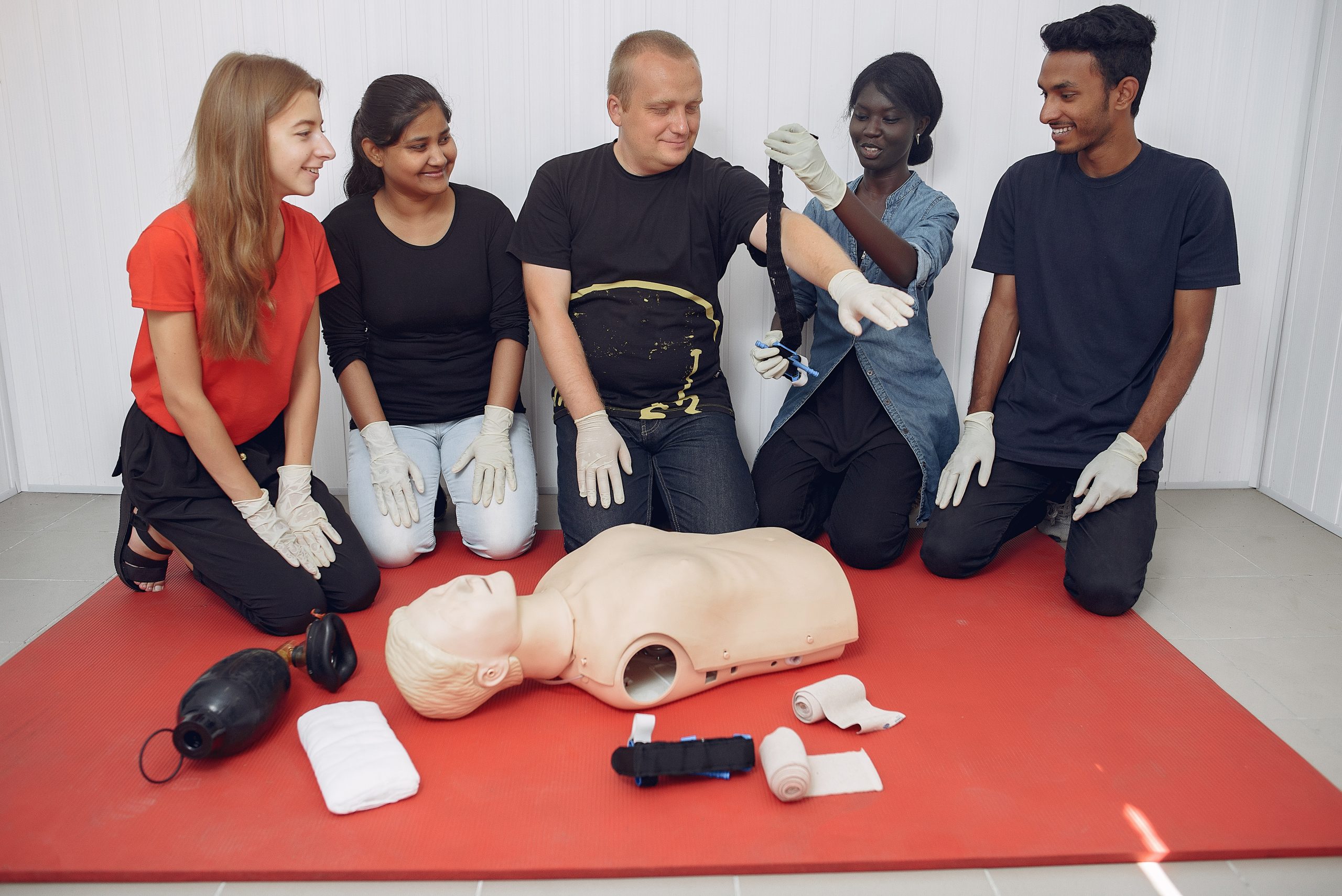
Basic Life Support (Theory)

Categories: Fundamentals
Wishlist Share
Share Course
Page Link
Share On Social Media

About Course

Course Overview

This course provides learners with theoretical knowledge of basic life support in health and social care settings. It focuses on recognising life-threatening situations, understanding emergency response procedures, and knowing how to act appropriately while awaiting professional medical assistance.


Lesson Outline (Bitesize – 4 Lessons)

  1. Introduction to Basic Life Support

  2. Recognising Cardiac and Respiratory Emergencies

  3. Emergency Response and Resuscitation Awareness

  4. Roles, Responsibilities, and Reporting

What Will You Learn?

  • By the end of this course, learners will be able to:
  • Understand the purpose of basic life support
  • Recognise signs of life-threatening emergencies
  • Understand emergency response procedures
  • Demonstrate awareness of CPR and defibrillation principles
  • Act appropriately while awaiting professional assistance
  • Understand reporting and documentation requirements

Course Content

Introduction to Basic Life Support
This lesson introduces the concept of basic life support and its importance in saving lives. Learners explore the aims of basic life support, the chain of survival, and the importance of early recognition and response in emergency situations.

  • 1. The Physiology of Life Support: Oxygenation and Perfusion
  • 2. The Mechanics of CPR: The “Thoracic Pump” Theory
  • 3. The “Chain of Survival” as a Time-Critical Matrix
  • 4. Professional Ethics: The “Best Interests” Standard
  • 5. Risk Assessment: The “Four H’s and Four T’s”
  • Lesson 1 Quiz

Recognising Cardiac and Respiratory Emergencies
Learners are taught how to recognise signs of cardiac arrest, breathing difficulties, and loss of consciousness. This lesson covers warning signs such as unresponsiveness, abnormal breathing, and collapse, helping learners understand when immediate emergency action is required.

Emergency Response and Resuscitation Awareness
This lesson provides awareness-level knowledge of emergency response actions, including calling emergency services, safe positioning, and understanding cardiopulmonary resuscitation (CPR) and defibrillation in theory. Emphasis is placed on working within one’s training and organisational policies.

Lesson 4: Roles, Responsibilities, and Reporting
Learners explore their role during a life-threatening emergency, including communication with emergency services, colleagues, and management. This lesson also covers documentation, incident reporting, and the importance of reflection and learning following an emergency situation.

Student Ratings & Reviews

No Review Yet

No Review Yet

Want to receive push notifications for all major on-site activities?